
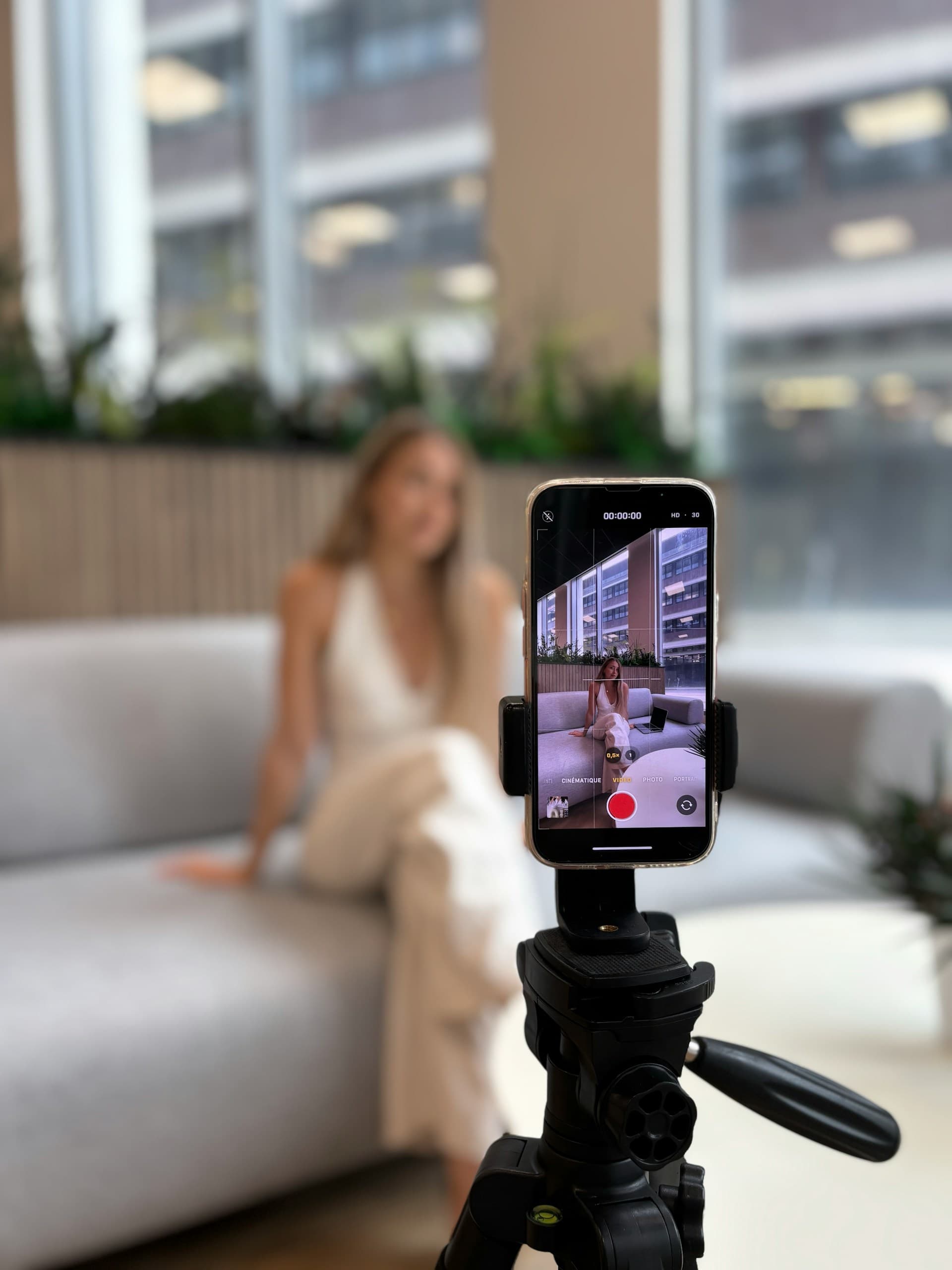
Selfie-style creator videos delivered a 0.70% click-through rate in paid social during Q1 2026 campaigns. Standard brand creative hit 0.32%. That is a 2.2x gap, and it held across fashion, health, and food verticals over a 12-week test window with 140+ creator deliverables.
- 2.2×increase
- CTR gap
- +18%increase
- Story completion
- -30–40%decrease
- Completion drop
Per-vertical sample sizes varied, with fashion contributing the largest share and health/fitness the smallest. The 2.2x CTR gap held directionally across all three verticals but was strongest in fashion. The findings below cover format mechanics, CTA structure, vertical-specific traps, and a scoring rubric you can apply to your own briefs.
The Conversion Content Checklist
Before digging into findings, a weighted scoring rubric for evaluating creator content before it goes live. Rate each criterion 1 to 5 and multiply by the weight. A score of 35+ predicts strong conversion performance based on the campaign data below.
| Criterion | Weight | What to look for |
|---|---|---|
| Authenticity signals | ×3 | Selfie-style framing, natural lighting, real environment (kitchen, gym, bedroom), unscripted delivery |
| CTA placement | ×3 | First CTA within the opening 15 seconds, repeated at close |
| Product visibility | ×2 | Product clearly shown in use, not just mentioned; discount code on screen |
| Urgency framing | ×2 | Time-bound language ("ends Friday," "last 50 units"), specific deadline |
| Duration match | ×1 | Fits the format sweet spot (see Format section below) |
| Visual quality floor | ×1 | Product looks good — clean background, adequate lighting on the item itself |
A creator talking to the camera in a messy kitchen with a visible discount code and a 15-second CTA scores higher than a studio shoot with perfect lighting and a CTA buried at the 45-second mark. The weighting reflects what actually moved purchase behavior in our data.
These weights come from regression analysis on the Q1 2026 campaign set. Authenticity signals and CTA placement had the strongest correlation with purchase events, which is why they carry 3x weight. Product visibility and urgency framing were significant but secondary drivers at 2x. Duration and visual quality were necessary conditions rather than performance drivers, scored at 1x.
Format and Duration: Where the Numbers Diverge
Instagram Stories
Stories remain the highest-converting format per dollar spent. The ideal structure is a multi-frame set totaling 45 to 60 seconds, not a single continuous clip. Structure it as five tappable frames: hook, product demo, CTA, reinforcement, link sticker.
Key mechanics for Stories:
- Selfie-style framing with the creator talking directly to camera
- First CTA by second 15, before viewers tap forward
- Discount code on screen in at least two frames, not just spoken aloud
- Link sticker on the final frame so the swipe-up moment lands after the full pitch
The Q&A format works well here. A creator answering real audience questions about a product while using it reads as helpful, not promotional. Completion rates on Q&A Story sets ran 18% higher than standard testimonial formats during our Q1 2026 tests.
Reels and TikTok
Short-form video reaches larger audiences but converts at a lower rate per impression. The effective duration window is 15 to 45 seconds, depending on content type. A quick product demo can land in 15 seconds. A routine-integration video (showing the product inside a morning workout or meal prep) needs closer to 40. Below 15 seconds there is not enough context to build purchase intent. Above 45, completion rates drop by 30-40%.
These formats serve two roles well:
- Message testing before committing paid amplification budget. Run three or four creators with different angles on Reels/TikTok, measure which hooks generate the most saves and shares, then build your Story briefs around the winning angles.
- Top-of-funnel reach that feeds into retargeting or Story-based conversion. Reels and TikTok impressions are cheap. Use them to build warm audiences, then retarget those viewers with Story content carrying a direct CTA.
One nuance on duration: "get ready with me" and routine-integration content naturally runs longer and maintains completion rates that a standard product review at the same length would not. Match duration to content type, not to a single universal benchmark.
Static Posts
Static feed posts generated the lowest engagement and conversion rates across the campaigns in this analysis. The gap has widened over the past two years as platform algorithms increasingly favor video. If budget is constrained, cut static first and redirect to Stories or short-form video.
CTA Structure and Urgency Mechanics
The call-to-action is where most creator content either converts or stalls. Vague CTAs ("check it out," "link in bio") do not move people. Specific, time-bound CTAs do.
CTA patterns from Q1 2026 campaigns
Drove action
Use these- Front-loaded CTA: first ask within 15 s, repeated at the close
- Fixed-amount discounts over percentages for AOV > $50 — "Save $40" beat "20% off"
- Verbal + visual code reinforcement — doubled code usage from 3% → 6%
- Personal endorsement flowing into the ask: "I've been using this for three weeks. Use SPRING40 before Friday."
Underperformed
Avoid these- Generic endorsements with no product-specific detail
- Corporate language that breaks the creator's natural voice
- Identical scripts across deliverables from the same creator — each subsequent piece performed worse
What Kills Conversion
Scripted Delivery
When creators read from a script or hit brand-mandated talking points in a rigid order, viewers notice immediately. Eye contact shifts, pacing becomes unnatural, and the vocal tone flattens. Give creators the key messages and let them communicate in their own words. In our Q1 2026 data, the conversion gap between scripted and unscripted delivery was the single largest variable after format selection. Brands that switched from approved-script workflows to key-message briefs saw 15-20% higher conversion rates within the first content cycle.
Visual Quality Floors (Not Ceilings)
This does not mean professional lighting. It means the product needs to look appealing. Poorly lit food, wrinkled clothing, and cluttered backgrounds undermine credibility even in otherwise raw, authentic content. In food and drink campaigns specifically, unappealing food visuals killed conversion regardless of the creator's audience size or engagement rate. The product itself must look good on camera. That is a non-negotiable minimum, not a production-value aspiration.
Creative Repetition
If a creator posts three pieces of content with essentially the same angle, each subsequent piece performs worse. Brief creators on distinct angles per deliverable: convenience for one, taste for another, value for a third.
Vertical-Specific Findings
Fashion and Footwear
Try-on hauls and outfit-of-the-day formats outperform flat-lay and styled product shots because they show the product on a real body in motion. Viewers care about fit, proportion, and how fabric moves.
Sizing content is underused and high-converting. Creators who state their height, weight, and the size they ordered, then show how the garment fits, generate measurably higher click-through rates than those who skip sizing detail. When a brand sells multiple SKUs, brief creators to feature two or three items max per deliverable rather than a full catalog dump. Focused comparison ("I ordered the wide-leg and the straight-leg, here is how they differ") gives viewers a decision framework.
Avoid sending overly specific styling directions. The audience trusts the creator's taste. Let them style the product their way. The best-performing fashion content in our dataset had minimal brand art direction beyond "show the product on your body and mention the sizing."
Health and Fitness
Trust takes longer to build in this vertical, and one-off posts rarely move the needle. Creators who share results over time (weekly updates, progress tracking, before-and-after formats) build the credibility that drives purchase decisions.
Product-in-action content must show real routines, not staged workouts. A creator using a supplement during their actual morning routine converts at higher rates than the same creator doing a dedicated review in front of a ring light. The context of real use is the trust signal.
Food and Drink
The most counterintuitive finding from our food campaigns: dedicated food creators rarely convert well for meal-kit and food subscription brands. Lifestyle and parenting creators who cook occasionally outperform them. The reason is audience context. When a food creator features a meal kit, their audience sees another sponsored recipe. When a parenting creator features the same product, their audience sees a genuine discovery, something that solves a real time-crunch problem.
Visual appeal drives impulse purchases. The preparation process matters almost as much as the final plating. Creators who show the full journey from unboxing to finished dish outperform those who skip to the end result.
Logistics affect content quality in ways brands overlook. Perishable products that arrive in poor condition or require complicated prep steps produce bad content. If a meal kit shows up with wilted greens or a protein that has thawed and refrozen, the creator either fakes enthusiasm (which viewers detect) or produces genuinely unappealing footage. Coordinate shipping timing with the content calendar so products arrive fresh, and flag any prep steps that look unappealing on camera so creators can work around them.
Convenience messaging resonates strongly. Framing around being time-poor, needing easy weeknight solutions, or wanting variety without planning effort maps directly to purchase motivation. The highest-converting food content in our Q1 2026 data combined all three elements: a lifestyle creator, a visible time-saving narrative, and appealing visuals of the finished dish.
Your Next Step: Score Your Current Pipeline
Take the Conversion Content Checklist from the top of this article and apply it retroactively to your last five creator deliverables. Score each one. Then compare those scores against their actual conversion performance. If the correlation holds (and in our data, it does), you now have a pre-publication filter that catches underperforming content before it goes live.
The practical move: build the checklist into your creator brief template so every deliverable gets evaluated before paid spend is committed. Share the rubric with your creators too. The best-performing creators in our campaigns already optimize for these criteria instinctively. Giving everyone the same scorecard raises the floor on content quality across your entire roster, and it gives you a shared language for feedback that is specific rather than subjective.
Stop optimizing for production value. Start optimizing for the six variables that actually predict whether someone clicks, swipes, and buys.